
Polaroid vs Instax: which camera is better?
By Phono Shop
Instant photography is more than a fashion trend. It's a return to the tangible joy of creation. In a world full of filters, analogue cameras such as Polaroid instant models or Fujifilm Instax remind us what it means to capture a moment that can be held in our hands.
These brands strive to convey an analogue way of life - slowing down, accepting imperfections and discovering beauty in the process. However, when it comes to making a decision and choosing between Polaroid and Instax, it is sometimes difficult to decide which option suits one's personal creative rhythm.
To make your decision easier, this article will compare their design, tape quality, image performance and other important features.
A brief history of instant photography
Before delving into the technical features and functions, it's worth pausing to explore the stories behind these two icons. Polaroid didn't just create instant photography - this company has changed the way people think about how memories are captured and experienced. When Polaroid's founder Edwin Land introduced the first instant camera in the 1950s, the world saw something magical: a photograph that develops before your eyes.
Square photographs with white frames soon became cultural symbols, appearing in art galleries, fashion publications and family albums. The Polaroid photograph was more than an image - it was a moment captured in a play of chemistry and light.
A few decades later, the spirit of instant photography has been revived and Fujifilm Instax. The Instax, launched in 1998, took the essence of Polaroid's invention and made it smaller, brighter and more affordable. Its characteristic colourful cameras and pocket-sized film strips made instant photography playful and social - perfect for capturing everyday joy.
Although they were born in different periods, these brands share the same pulse. They invite you to slow down, experiment and discover beauty in imperfection - the values at the heart of the analogue way of life.
Design and sensation: retro art versus playful energy
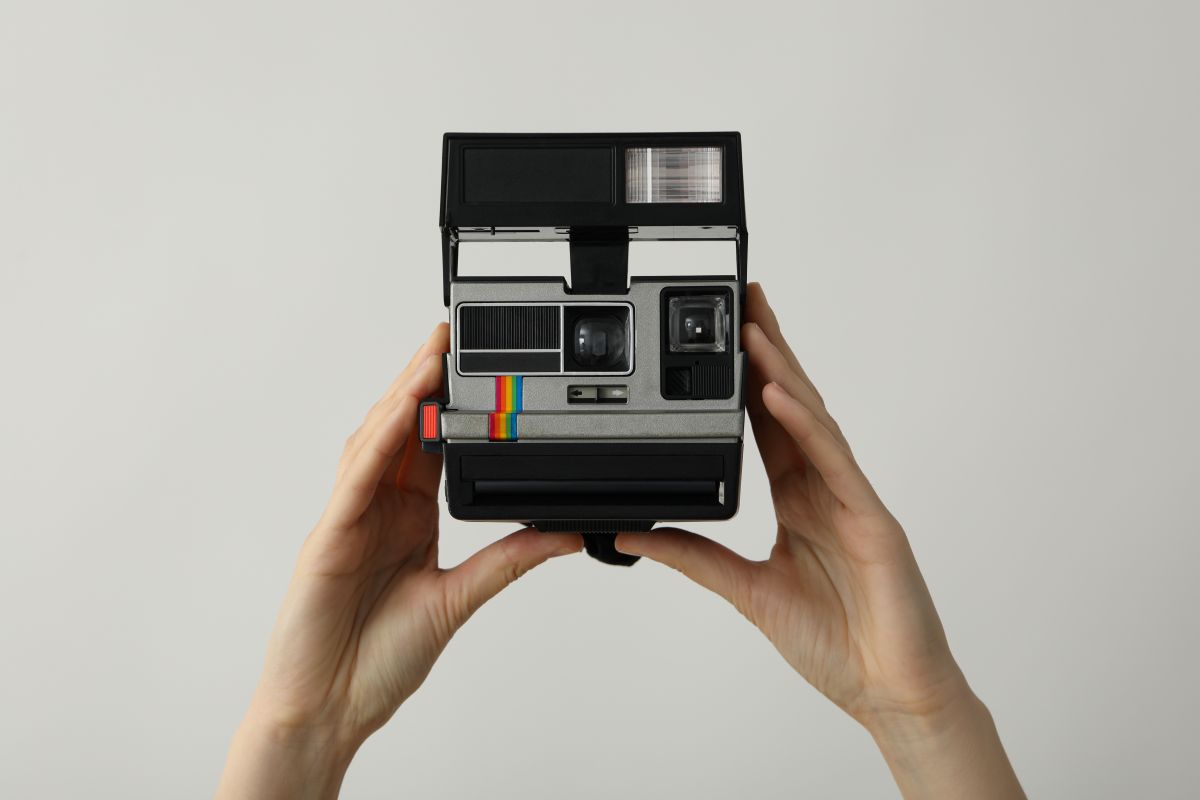
The way a camera feels in your hands has a big impact on the experience of using it. Certain designs invite experimentation and artistic expression, others - spontaneous and joyful creativity. Let's take a brief look at the designs of the Polaroid and Instax models.
| Feature | Polaroid | Instax |
| Design | Retro-inspired, sculptural | Compact, colourful, modern |
| Construction quality | Robust, reminiscent of a classic camera | Lightweight, easy to carry |
| Sample models | Polaroid Now+, Polaroid Go, Polaroid I-2 | Instax Mini 11, Instax Square SQ1, Instax Mini Evo |
| Ideal | For creative people and collectors | For travellers and social photographers |
In summary, Polaroid speaks to the artist and Instax to the adventurer. Either way, both strive to ensure that creation is enjoyable in the hand.
Strip types and sizes
The film determines the look, tone and mood of the snapshot, and here the differences between Polaroid and Instax are obvious.
| Format | Polaroid film | Instax ribbon |
| Main types | i-Type, 600 | Mini, Square, Wide |
| Image size | 3.1 × 3.1 in. (square) | Mini: 2.4 × 1.8 in. / Square: 2.4 × 2.4 in. / Wide: 3.9 × 2.4 in. |
| Emergence time | 10 - 15 minutes | 90 seconds |
| Cost of shots (indicative) | ~2 € per frame | ~0.80 - 1 € per frame |
| Appearance and feel | Soft tones, vintage charm | Bright colours, strong contrasts |
In summary, for artistic expression and mood, Polaroid film is the optimal option. For speed and constancy, Instax film is better.
Image quality and style
Instant photography has never been about technical perfection - it's a search for emotional authenticity. Each brand brings its own visual language to the photo.
| Aspect | Polaroid | Instax |
| Colour reproduction | Muted, dreamy colours | Bright colours with high contrasts |
| Brightness | Softer accents | Sharp and clear images |
| Exposure accuracy | Variable (light sensitive) | Very constant |
| Creative possibilities | Dual exposure, manual control (Now+) | Hybrid Digital Preview Mode (Mini Evo) |
Verdict:
Polaroid gives emotion and mood, while Instax prefers clarity and reliability. You can see it as the difference between the art of photography and a spontaneous fun shot.
Ease of use and features
Simplicity is essential for every creative journey, as it gives you the freedom to shoot freely without thinking too much about the technical stuff. Both Polaroid and Instax have found ways to make analogue photography simple and accessible, while retaining its unique character.
| Model | Key features | Skill level |
| Polaroid Now+ | Auto Focus, Dual Exposure, App Control | Intermediate - advanced |
| Polaroid Go | Compact design, easy one-touch shooting | Beginner |
| Instax Mini 11 | Auto-exposure, mirror for selfies | Beginner |
| Instax Mini Evo | Hybrid mode: digital capture and analogue photo | Beginner - Intermediate |
In short, if you like to experiment, go for Polaroid. If you value simple and uncomplicated photography, choose Instax.
Availability and price of strips
The availability of the tape determines how freely you can create. Fortunately, though in different ways, both Polaroid and Instax keep analogue photography within reach.
| Criterion | Polaroid | Instax |
| Ribbon packaging | 8 shots per pack | 10 shots per pack |
| Price per photo | Larger (~2 €) | Lower (~1 €) |
| Availability | Widely available, but more often in specialised, higher-end stores | Available in most shops and online |
| Best for | Art projects, exhibitions | For parties, travel, blogging |
You could say that Polaroid is an investment in creativity, because every shot is thoughtful and unique. The Instax has greater convenience and simplicity, making it more playful and free.
Accessories and attachments needed for instant cameras
The continuity of snapshot photography depends not only on the process of developing the image, but also on the way the creative tools are stored, displayed and transported. The right accessories can make analogue photography even more inspiring and personal.
Phono.shop you'll find a carefully curated range of accessories and attachments designed to make your Polaroid or Instax camera even more convenient and your creative masterpieces even safer. One example is Lomography Photo Album. It's a particularly useful accessory, allowing you to keep your favourite photos in one place. This way, you can turn your daily snapshots into a tangible visual diary.
For those who like to take photos on the go, the next accessory will come in handy - metal camera chain. This tool adds both functionality and style, as a camera that's always close at hand becomes an accent to your image.
In this shop you can also find Fujifilm Instax Wide supplements, strips and other useful tools to help you keep your adventures on track and as productive as possible.
In short, Phono.shop offers everything from expressive design details to practical accessories, so you can enjoy your instant photography in style, comfort and without any hassle.
Final thoughts: how to choose between two classics?

Polaroid or Instax? It's not a fight - it's a dialogue between different artistic expressions. Polaroid gives depth, texture and nostalgia. It is a unique handmade work that always remains relevant and never gets old. Instax brings speed, clarity and the joy of sharing a moment here and now.
Both manufacturers perfectly reflect the values of analogue life: the slower pace of life, the importance of the moment and the ability to enjoy imperfection. So no matter which option you choose, the result is sure to be great.